
Defining Watch Icons
Two methods for measuring greatness and starting arguments

Measuring the greatness of art as the product of importance and perfection is fruitless, but as the watch industry remains awash with self-declared icons, perhaps we need some calipers to measure icon-ness.
Press releases declare every new launch “iconic”. Brands describe watches that have barely reached their second birthday as icons. When everything is iconic, nothing is. So, collectors and enthusiasts need a way to separate genuine icons from marketing hyperbole. Pascal Brandt’s 2023 Europa Star column “It’s raining icons” provided a framework, but I argue it needs refinement. Here is my structured and repeatable method for evaluating whether a watch genuinely qualifies as an icon.
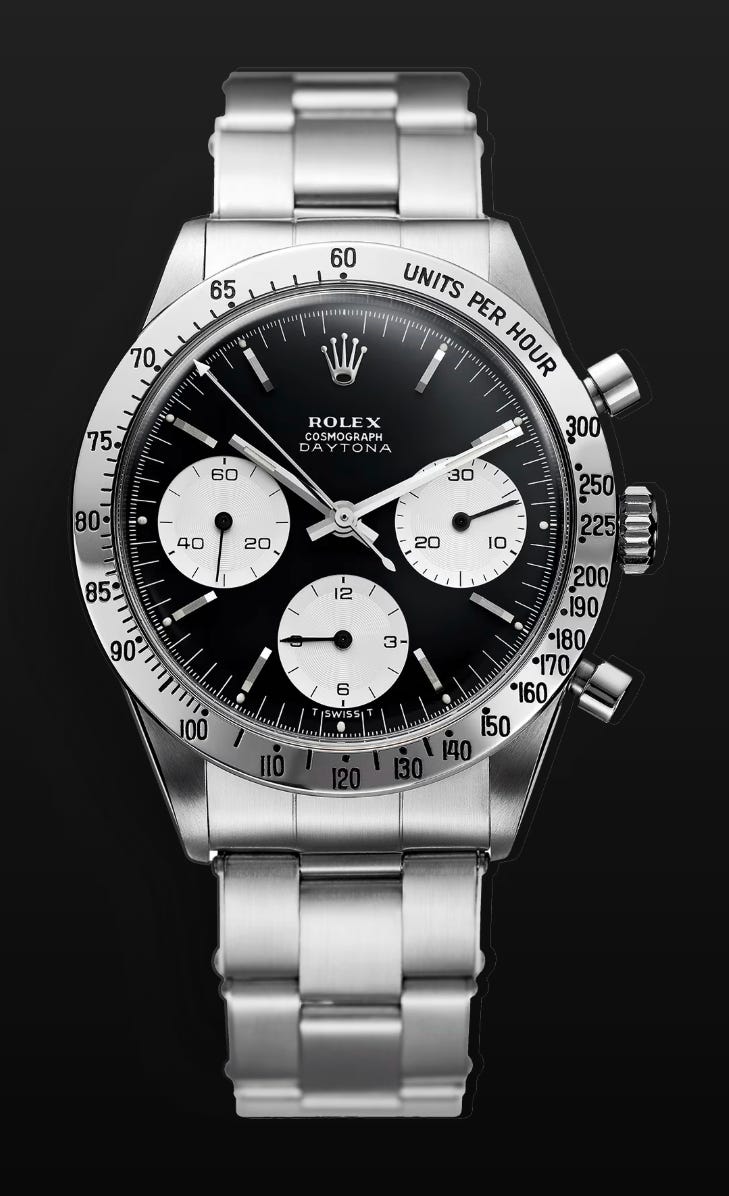
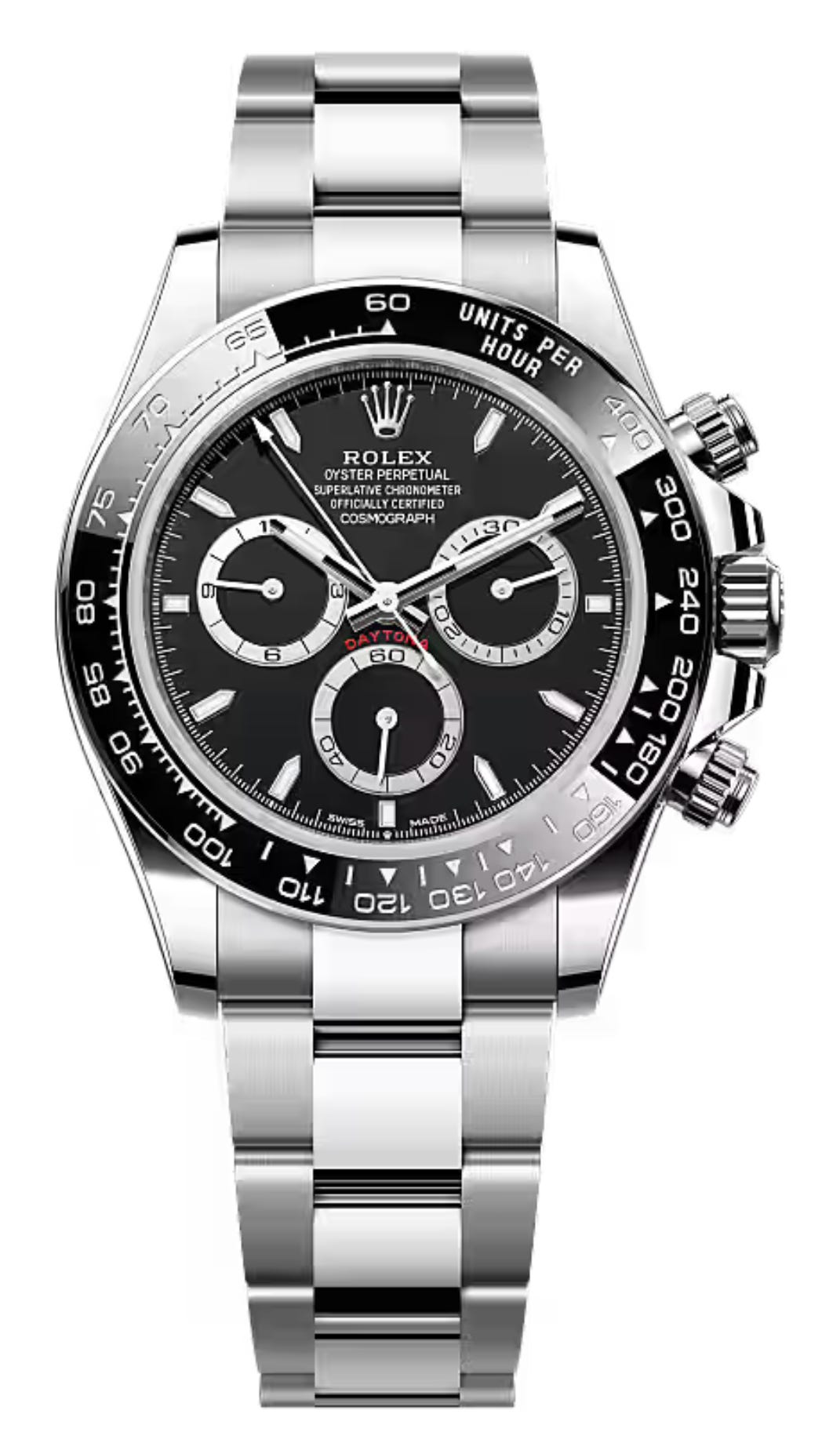
Distinctive, desirable and collectable. But is it an icon?
The Original Framework
Brandt does not present a formal scoring system, but seven implied criteria can be extracted from his argument:
First, an icon must have an existence measured in decades.
Second, it must have been created in the twentieth century.
Third, it must have retained its original design and substance without faltering.
Fourth, it must be as much in demand now as ever, with prices on the parallel and pre-owned markets as empirical evidence.
Fifth, icons are models, not brands. The model name precedes the brand in conversation.
Sixth, icons are rooted in a specific moment in history or associated with a certain event.
Seventh, icons are impermeable to the changing whims of fashion, whether design, materials, colours or any other feature.
This is far superior to marketing speak. Brandt’s observation that just three to four models account for the lion’s share of grey and pre-owned market sales is particularly powerful. It directs attention away from marketing claims and towards observable market behaviour, although the underlying transaction data are not provided in his article.
Where the framework needs refinement
The seven implied criteria extracted from Brandt’s argument provide an analytically rigorous starting point, but they contain some logical gaps and omits some critical qualities that separate genuine icons from merely popular watches. Addressing these produces a more explicit, testable, and defensible framework.
20th Century Requirement
Fristly, Brandt is explicit that an icon “must have been created in the twentieth century.” This creates a logical problem. Consider a watch launched in 2001: by 2026 it would have twenty-five years of unchanged design, sustained secondary-market demand, and broad cultural recognition among collectors. Should it fail icon status purely because of a calendar cutoff?
The Richard Mille tonneau architecture, introduced with the RM 001 in 2001, illustrates the issue. Its case has achieved genuine icon-level recognition among collectors and defined Richard Mille’s aesthetic language for twenty-five years. The twentieth-century rule is a useful heuristic for filtering out premature marketing claims, but it is not logically necessary. It should be folded into the longevity criterion as a preference rather than a standalone requirement.
Historical-event Requirement
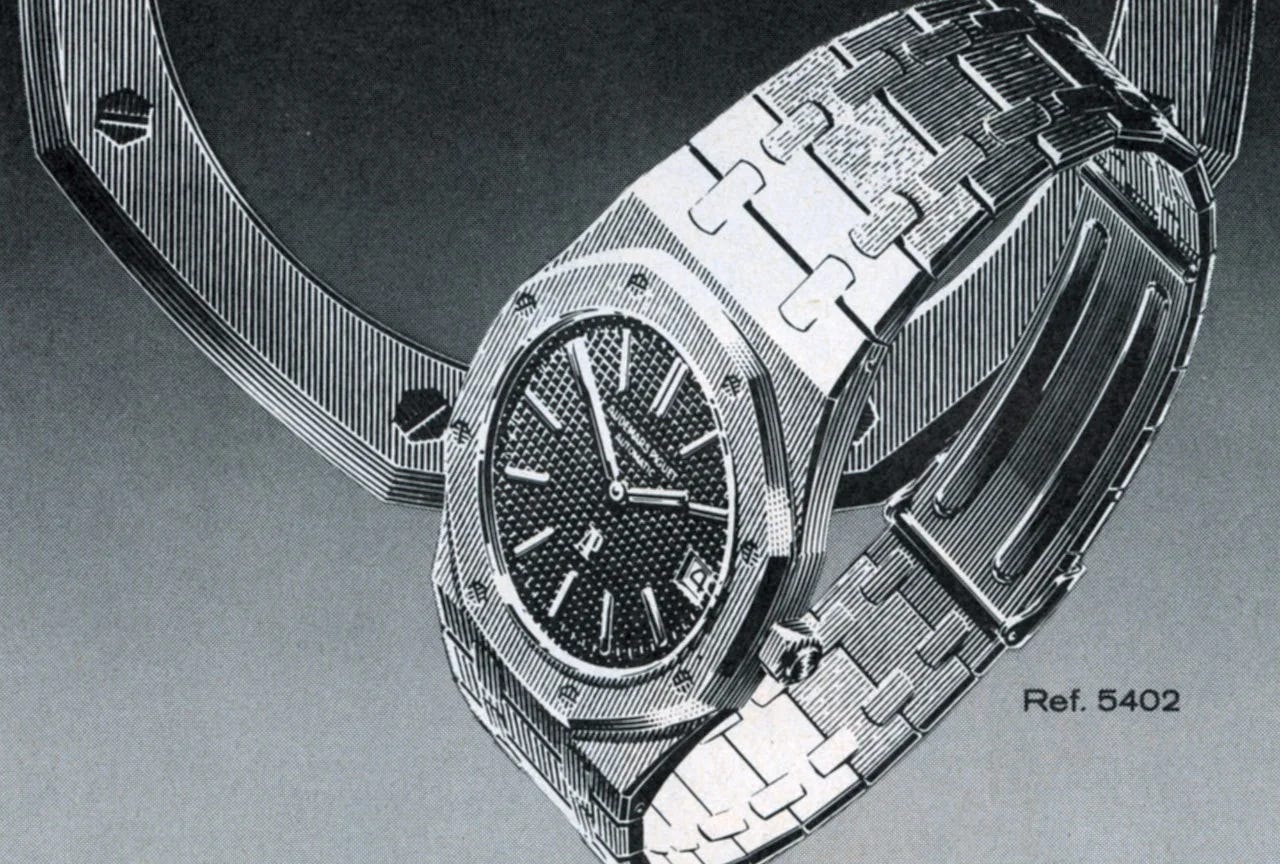
Second, Brandt’s examples are all event-associated: the Moon landing for the Speedmaster, flying for the Santos, polo matches for Reverso, WWI tanks for the Tank, the fictional submarine reference for the Nautilus, the royal tree for the Royal Oak. But what about the Patek Philippe Calatrava from 1932? It is one of the strongest candidates for dress-watch icon status: round case, clean dial and understated elegance, but without a defining association with one specific historical event.
Some icons derive their status from design innovation or philosophical principles rather than specific moments. The Calatrava embodies “form follows function” and the restrained modernism of the interwar period, but there is no singular event to point to. This criterion should be reframed as “rooted in a specific cultural, functional, or design moment” and expanded to include category creation, broader than just historical events.
How many criteria to qualify?
Thirdly, the most critical gap is that Brandt never specifies how many criteria must be satisfied. Are all seven mandatory? Can a watch missing one criterion still qualify? His article does not say. This is at least one analytical gap that needs filling.
The solution is a two-stage system. The rapid screener requires minimum performance in each of Design, Market and Cultural dimensions. The full scoring card assesses each criterion from zero to five, with defined score thresholds separating clear icons, borderline icons and cult favourites.
Two missing criteria
The fourth issue is that Brandt’s framework is missing two important qualities that separate genuine icons from merely popular watches.
Immediate Visual and Nominal Recognition
Brandt does not explicitly separate recognisability from design continuity. A watch can retain its design for decades without becoming visually distinctive or establishing an identity independent of its brand.
A genuine icon should be identifiable at a glance by its case, bezel, dial or bracelet architecture. Its model name can also carry meaning independently of the manufacturer: “a Speedmaster” rather than merely “an Omega”.
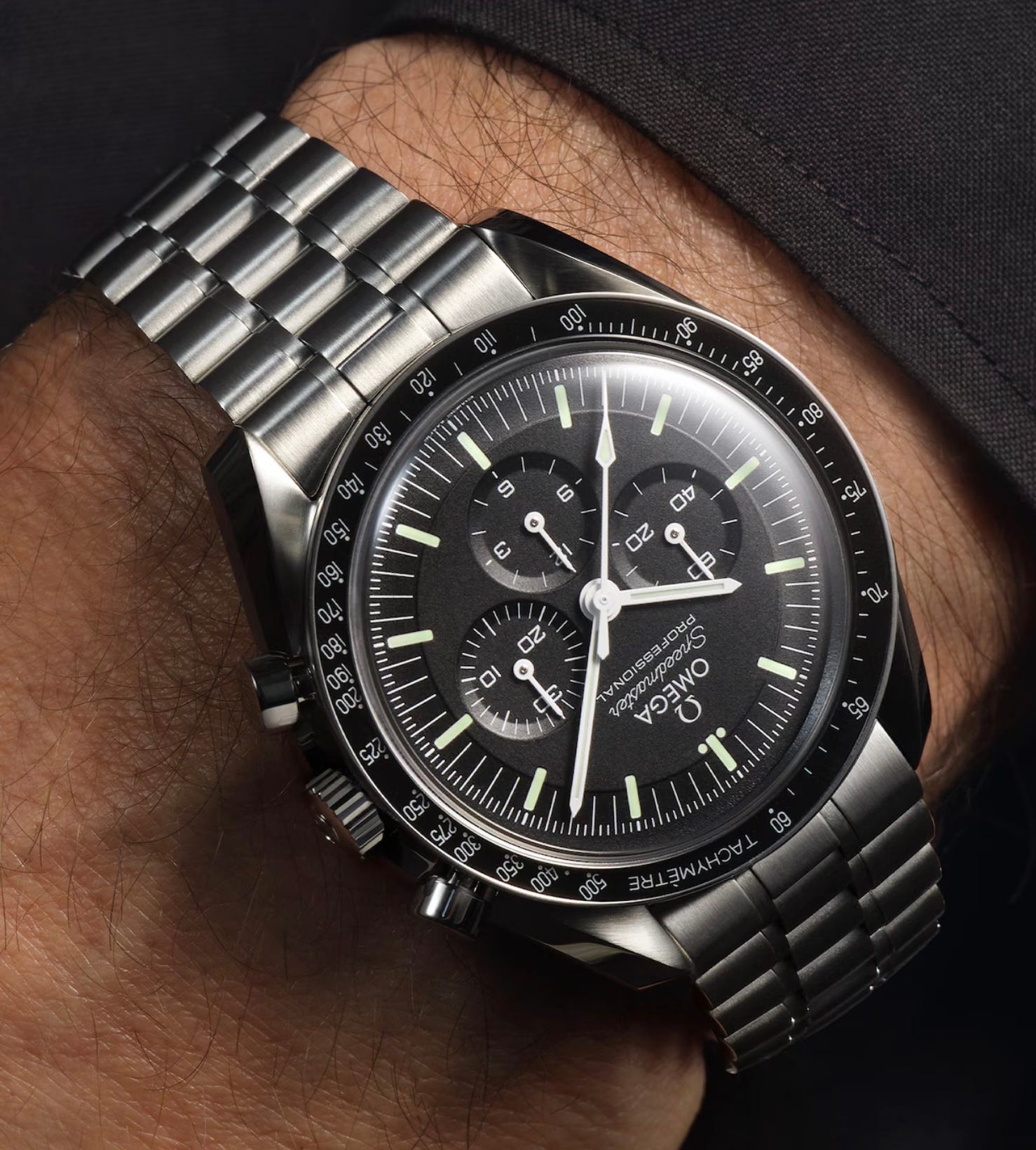
Current Speedie. Not as good looking, but indistinguishable to most from the first twisted lug 105.012 from 1963
But here is also a trap. Distinctiveness is necessary, and easy to lean on, but not sufficient. A watch may be instantly recognisable to enthusiasts without possessing broad cultural recognition, sustained market depth, longevity or cross-generational transmission. The Luminor is a good example: its crown guard makes it visually distinctive within watch collecting, but many people outside the category would neither identify it nor know its name. Distinctiveness alone is therefore insufficient.
Cross-generational Transmission
Brandt mentions generational watches in passing but does not make it a criterion. True icons are inherited or sought by multiple generations of collectors. The Submariner has been worn and collected across successive generations. The Tank has been worn by multiple generations since 1917. This is different from sustained demand—it is about cultural transmission across time, not just market prices.
A watch can have strong secondary-market performance for a decade without achieving cross-generational status. Despite their recognition, the Richard Mille tonneau models have not yet demonstrated this quality; they remain too recent. This criterion separates watches that are culturally embedded from those that are merely commercially successful.
The refined framework
Addressing these limitations produces a revised framework. I divide it into seven criteria that can be used either as a rapid screen or for a more granular analysis:
1. Immediately recognisable visually and by model name: the watch is identifiable through its overall case, bezel, dial or bracelet architecture. Enthusiasts say “I want a Speedmaster” rather than merely “I want an Omega.”
2. Retained original design and substance: the case shape, dial architecture and defining features have remained recognisably continuous despite technical, dimensional or material evolution.
3. Sustained and broad market relevance: primary and secondary-market activity demonstrates persistent demand, meaningful transaction depth and resilience across market cycles. Premiums over retail may support the assessment but are not required.
4. Impermeable to fashion and trends: the watch remains desirable regardless of changing preferences in design, materials, colours, or sizing.
5. Proven longevity: at least 25 years is normally required before icon status can be assessed, 30 years is preferable, and 50 years or more provides compelling evidence.
6. Rooted in specific historical cultural or design moment, or defined its category.
7. Cross generational transmission, inherited or sought by multiple generations of collectors, demonstrating cultural embedding beyond market performance.
This retains Brandt’s core insights whilst making the framework more explicit, testable, and logically defensible.